

Field notes
The labelling bill nobody budgets for
Annotation is the line item that arrives after the model is approved. Where the hours actually go, and which of them a generator can take back.
 AI in the real world
Key takeaways
- Annotation arrives as a line item after the model is approved, which is the worst possible order.
- Most of the hours go to the rare classes, not the common ones.
- Review and adjudication cost more than first pass labelling and are usually unbudgeted.
- Generated footage arrives pre labelled, which is where it pays for itself.
The model gets approved, the cameras get ordered, and then somebody works out that the training set needs forty thousand labelled frames and asks, reasonably, who is doing that.
Where the hours actually go
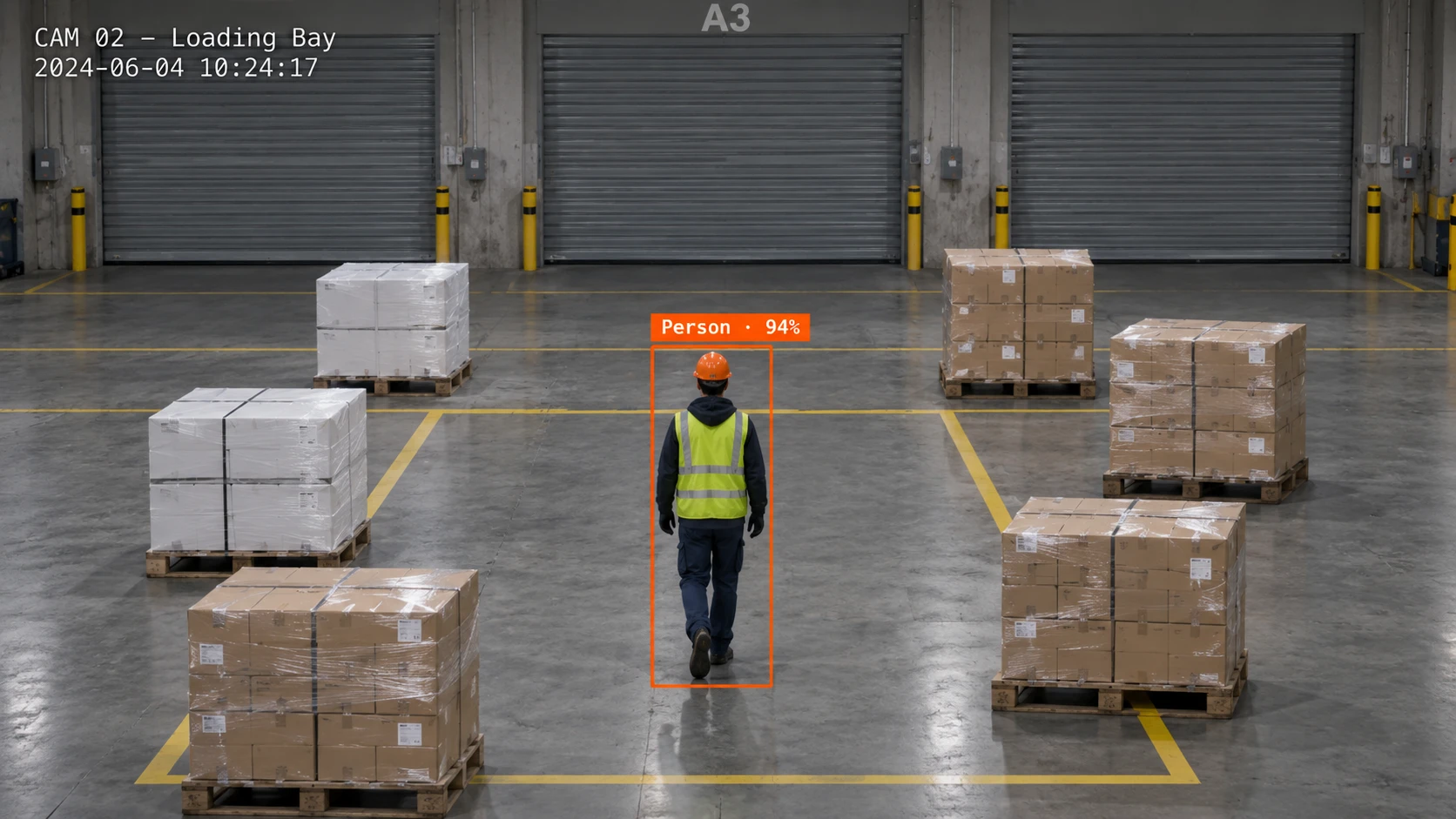
Not where people assume. The common class, a person in a high visibility vest, in daylight, in the middle of the frame, is fast, consistent, and cheap. The bill is made up of everything else: the partial occlusions, the two people or one arguments, the frames where reasonable annotators disagree and somebody senior has to settle it.
| Activity | Share of hours | Usually budgeted |
|---|---|---|
| First pass labelling, common cases | 35% | Yes |
| Rare and ambiguous cases | 30% | Rarely |
| Review and adjudication | 25% | No |
| Guideline rewrites and relabelling | 10% | No |
What a generator takes back
A generated frame knows what is in it, because something placed every object in the scene before it was rendered. The labels are exact, free, and consistent, which removes the adjudication argument along with the labelling hour, and adjudication was the expensive half.
Frequently asked
Can existing labelled footage be reused across sites?
Partly. The classes transfer, the camera geometry does not, and a set labelled at four metres does a model at nine metres very little good.
Is it worth labelling in house?
For the ambiguous ten per cent, yes, those decisions are about your policy. The routine bulk is the part worth outsourcing or generating.
Keep reading
All articles
Platform
Generating the night shift you cannot film
Storms, glare and the hour before dawn are the conditions that break a model and the hardest to capture on site. How to ask for them instead.
Read article
Deployment
What the first week on site actually looks like
Day by day, from a spreadsheet of camera credentials to the first alert somebody acted on, including the parts that never make it into a rollout plan.
Read article
Field notes
Writing a handover the next shift will read
An incident log is only worth the ninety seconds the next operator gives it. A short template, and the three fields that earn their place.
Read article