

Deployment
What a hundred cameras cost your uplink
Inference at the edge, clips to the centre. A worked bandwidth budget for a single site, and the two settings that halve it without losing evidence.
 AI in the real world
Key takeaways
- Send incidents, not video. The uplink cost is a design decision, not a fact about cameras.
- One edge host per site turns a hundred streams into a few megabits of output.
- Clip length and thumbnail policy are the two settings that halve the bill.
- Budget for the retry storm after an outage, not just the steady state.
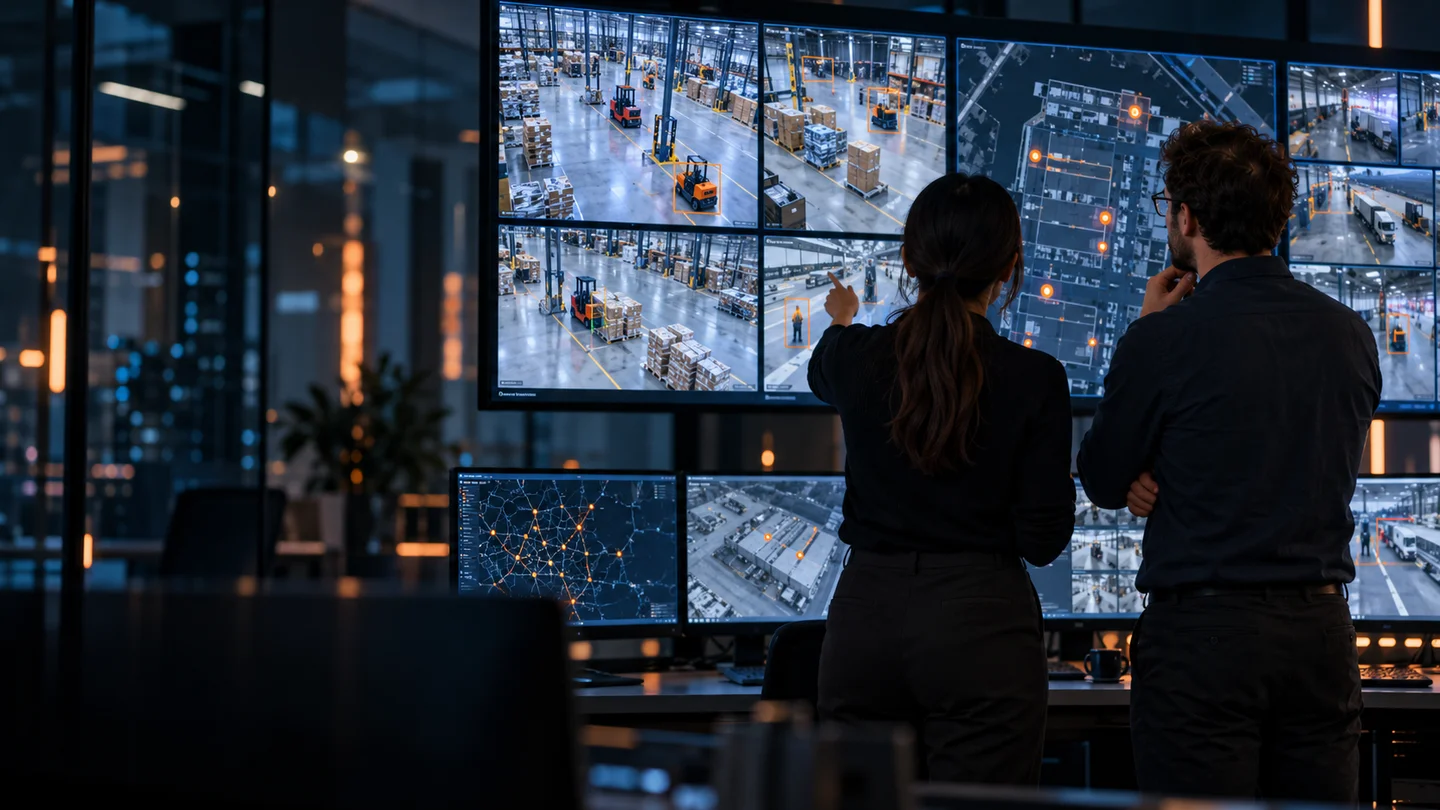
A hundred cameras at 4 Mbit each is 400 Mbit, and no site office has that going out. The number only looks frightening while the plan is to send the video somewhere; once the model runs where the cameras are, the arithmetic changes shape entirely.
A worked budget for one site
| Traffic | Rate | Notes |
|---|---|---|
| Substreams to the edge host | ~60 Mbit | Stays on the local network |
| Detections out | < 0.5 Mbit | Structured rows, continuous |
| Incident clips | ~2 Mbit avg | Bursty, follows the shift |
| Console live view | 4 Mbit | Only while somebody is watching |
The line out carries under seven megabits in the ordinary case, and the sixty stays indoors where it is free.
The two settings that halve it
- Clip length. Six seconds before and after is almost always enough to judge an incident; thirty seconds either side quadruples the bill and is watched at 4× anyway.
- Thumbnails on demand. Generating a preview for every detection is cheap locally and expensive over the line; send them when the console asks.
Frequently asked
What happens to detections while the line is down?
They queue locally with their clips and go out in order when it returns. Detection never depended on the uplink; only the console's view of it did.
Is 4G enough for a small site?
For detections and clips, usually yes. For a live view somebody keeps open all day, plan for it not to be.
Keep reading
All articles
Field notes
The labelling bill nobody budgets for
Annotation is the line item that arrives after the model is approved. Where the hours actually go, and which of them a generator can take back.
Read article
Platform
Generating the night shift you cannot film
Storms, glare and the hour before dawn are the conditions that break a model and the hardest to capture on site. How to ask for them instead.
Read article
Deployment
What the first week on site actually looks like
Day by day, from a spreadsheet of camera credentials to the first alert somebody acted on, including the parts that never make it into a rollout plan.
Read article