
Platform
Does a model trained on Terra hold up on your cameras?
The gap between a generated scene and a wet lens at four in the morning, measured rather than argued about, and what closes it.
 AI in the real world
Key takeaways
- The gap is real, measurable, and smaller than the argument about it suggests.
- Generated footage earns its place on the conditions you cannot film, not on the ordinary ones.
- Always validate on real frames from the cameras that will run it.
- Mix rather than substitute: synthetic for coverage, real for calibration.
A generated scene is clean in ways a real camera never is. No smeared lens, no compression artefacts crawling across a dark yard, no auto exposure hunting when a door opens. The question is whether a model trained on the clean version recognises the dirty one.
Measuring the gap instead of arguing about it
Score the same model twice, once on generated frames, once on a held back week of real footage from the site, and put the two numbers side by side. The distance between them is the gap, in the only unit that matters, and it is a number you can work on.
| Trained on | Generated set | Real held back week |
|---|---|---|
| Real footage only | 71% | 88% |
| Generated only | 96% | 74% |
| Mixed | 93% | 91% |
The third row is the argument for mixing, and the second is the argument against believing a generated benchmark on its own.
What closes it
- Match the optics you actually have, focal length, mounting height, and the compression the recorder applies.
- Generate the failure conditions, not the poster shots.
- Keep the real set for calibration and never train on it.
Frequently asked
Can a model be trained on generated footage alone?
It can be built that way and should not be signed off that way. Validation on real frames from the deployment cameras is the step that makes the number mean something.
How much real footage is enough?
Less than people expect for calibration, a few hundred well chosen clips, and more than they expect for the awkward conditions, which is exactly where generating it pays.
Keep reading
All articles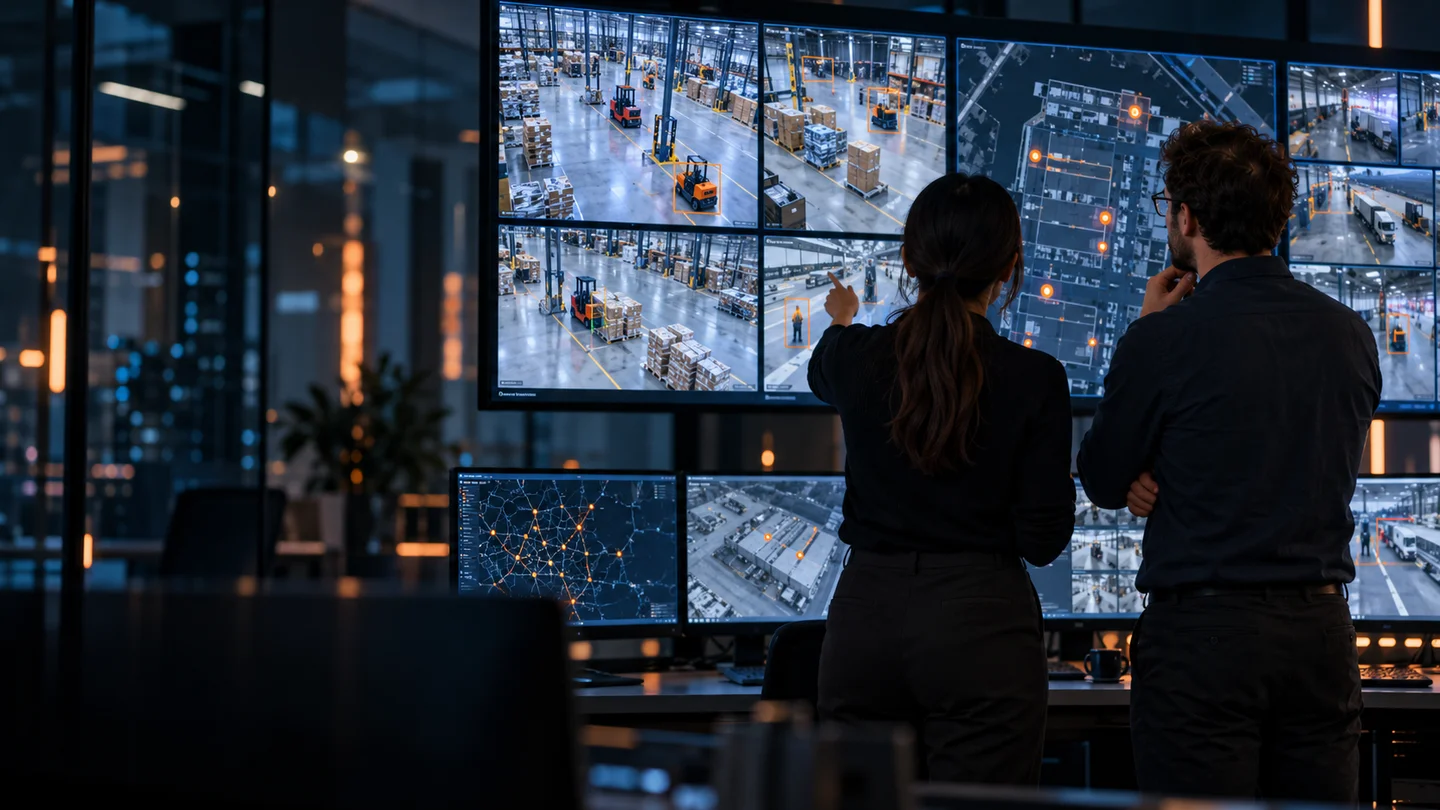
Deployment
What a hundred cameras cost your uplink
Inference at the edge, clips to the centre. A worked bandwidth budget for a single site, and the two settings that halve it without losing evidence.
Read article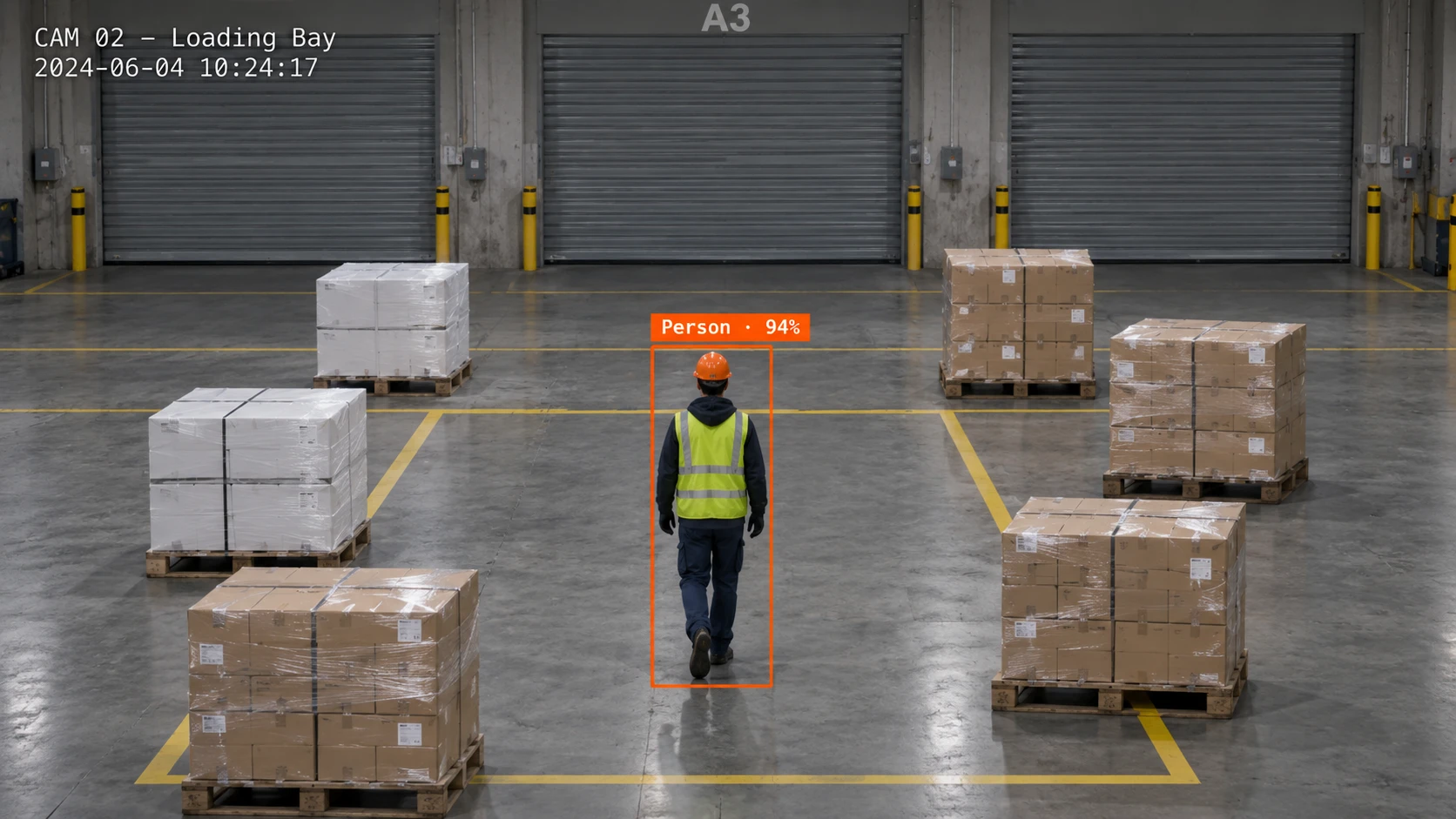
Field notes
The labelling bill nobody budgets for
Annotation is the line item that arrives after the model is approved. Where the hours actually go, and which of them a generator can take back.
Read article
Platform
Generating the night shift you cannot film
Storms, glare and the hour before dawn are the conditions that break a model and the hardest to capture on site. How to ask for them instead.
Read article